7-lesson nutrition course
Build bigger meals
that still support your goals.
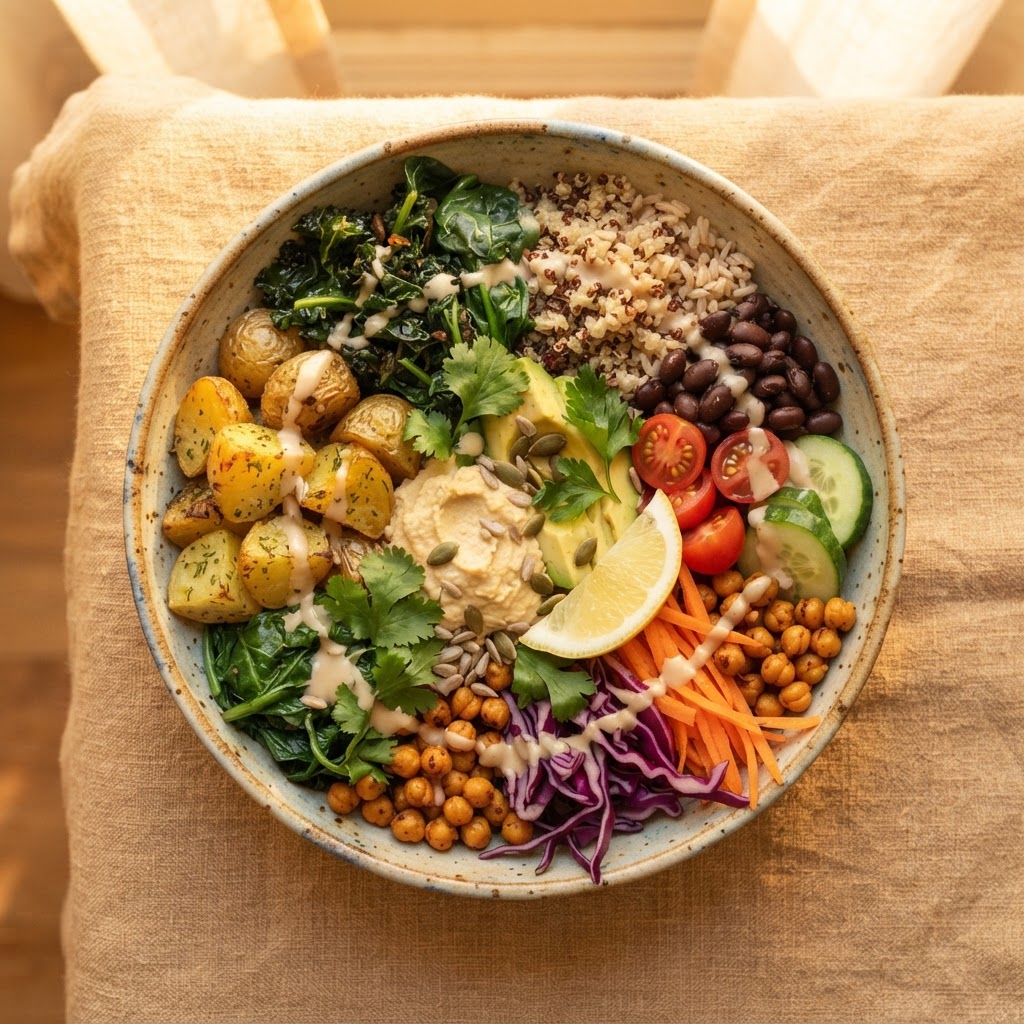
Learn how calorie density, food volume and meal composition work together so you can build generous, satisfying meals with more confidence.
Instant access · Secure checkout with Stripe
Already purchased? Log in to access your course.
Why a bigger plate matters
The problem
You don't need less food.
You need lower calorie density.
Two meals can look completely different in size and still contain a similar amount of energy.
One plate can be small, dense and easy to finish while still leaving you wanting more.
Another can be generous, colorful and filling, built from foods that carry more water, fiber and volume.
Most people are never taught the difference between eating less and building a meal differently.
You can start changing what takes up space on the plate.
That is what The Bigger Plate Method teaches you.
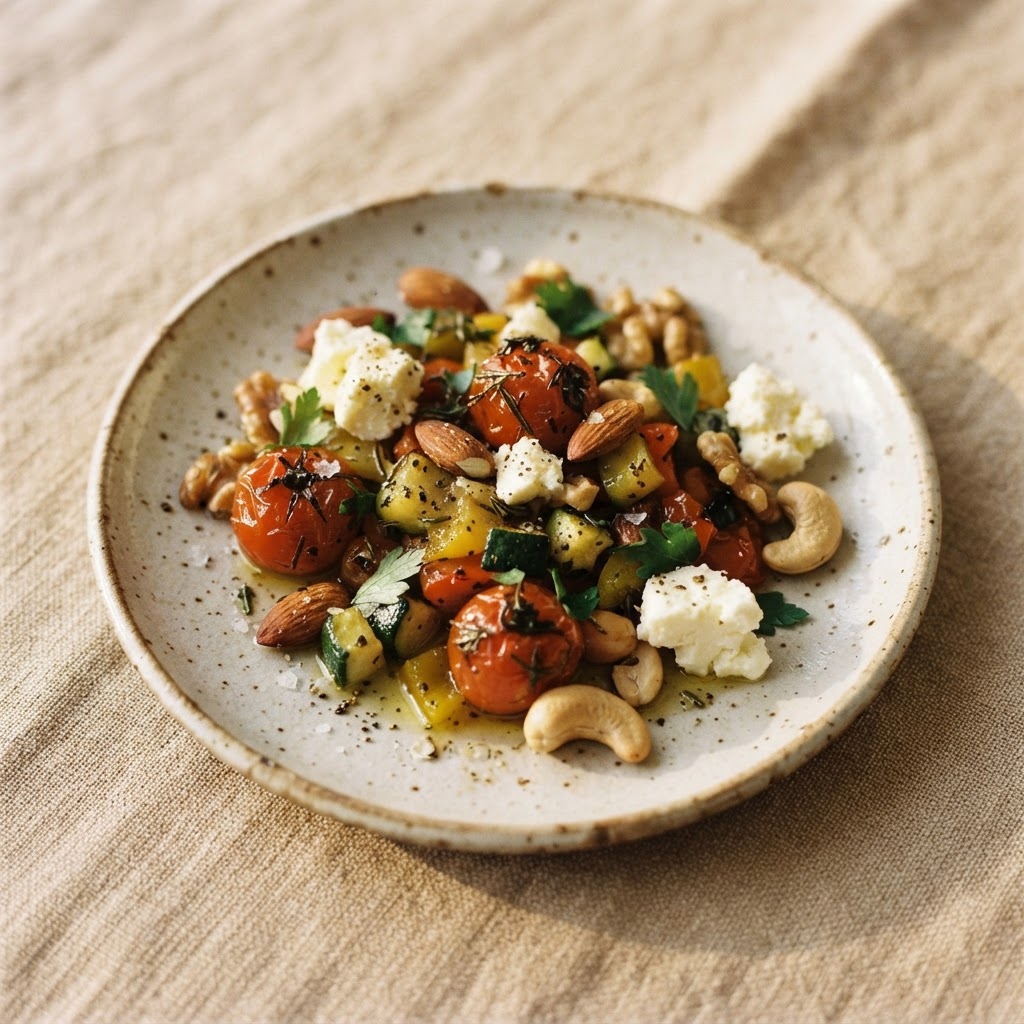 Smaller plateMore energy-dense foods.
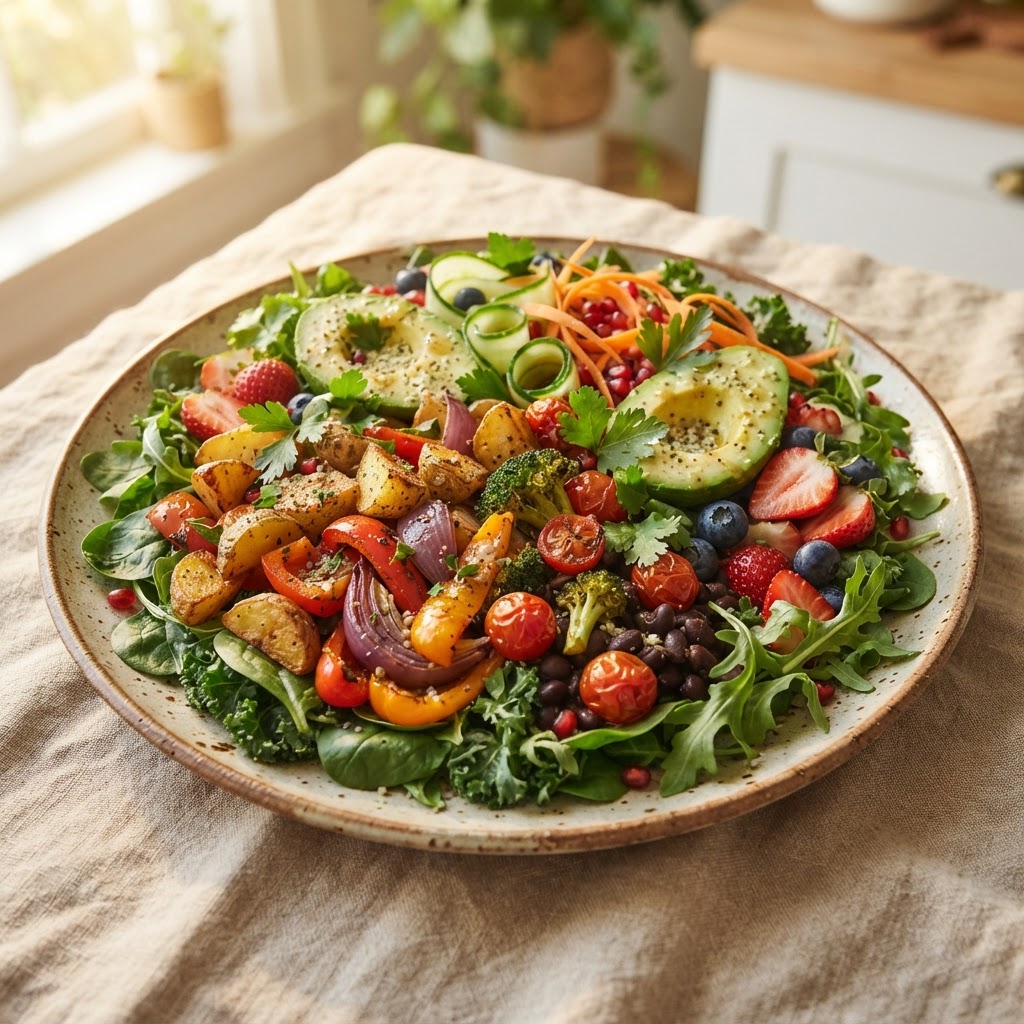 Bigger plateLower calorie density foods.
Different amount of food. Similar energy.
The course
Seven lessons
Why Your Body Keeps Asking for More
Video · 12 minUnderstand why eating less can sometimes make food increasingly difficult to stop thinking about.
Where the Energy in Food Comes From
Video · 20 minMeet the 4·4·9 Rule — why carbohydrates, protein and fat behave differently, and what that changes about a plate.
Calorie Density
Video · 25 minLearn why water, fiber, fat and food structure determine how much food you physically get for your calories.
How to Use Calorie Density in Real Life
Video · 15 minTurn the theory into larger breakfasts, lunches, dinners and snacks.
Learn to See What Food Is Made Of
Video · 25 minUse nutrition tools to understand macros and micronutrients without making tracking the goal.
When You Still Want More
Video · 25 minExplore fullness, fiber, eating pace, flavor satisfaction, hydration and emotional eating.
Where Do You Go From Here?
Read · 5 min readBring everything together and understand how to continue inside FitByFood.
Seven lessons. About two hours. The whole method, in order.
Nothing to memorise. You learn the pattern, then build your own plates with it.
See inside
Your course, before you buy it
This is the actual dashboard that opens the moment you get access — your lessons, your progress, your tools, all in one place.
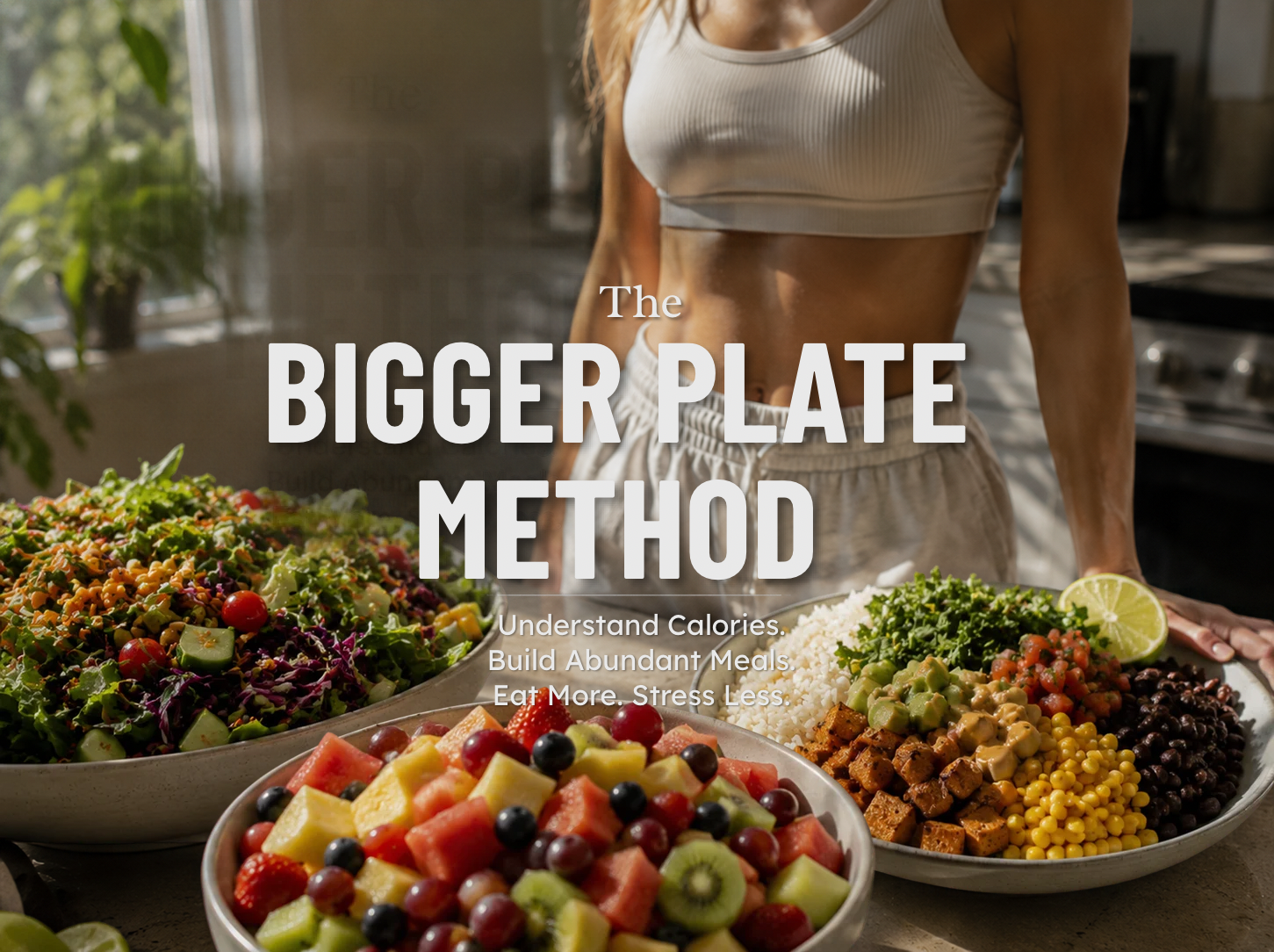
Desktop view · full curriculum dashboard
Mobile view · learn anywhere
That is the actual dashboard.
It opens the moment you get access. Your lessons, your progress, your tools.
Outcomes
What you'll be able to do after the course
- Look at a meal and understand where most of its calorie density is coming from.
- Build larger portions without simply adding more energy everywhere.
- Understand why water, fiber and fat change how much food you can physically eat.
- Use carbohydrate-rich foods such as potatoes, rice, oats, pasta, beans and fruit with more confidence.
- Use nutrition tracking to learn about food without making tracking the goal.
- Recognize the difference between physical fullness, satisfaction and wanting more for other reasons.
That is what changes when you understand the plate.
Not more rules to follow. A way of building meals that finally works with your appetite.
Meet Alva
I studied nutrition
so you don't have to.

I took the student loans. You get the simple version.
You don't need to become a nutritionist.
You need to understand the patterns that matter.
How energy hides in food.
Why volume changes satisfaction.
How a meal can be built differently.
What to do when you still want more.
Enough to make decisions for yourself.
Not more rules. More nutritional agency.
A reframe
If eating less worked well for you,
you probably wouldn't be here.
You may already know how to make a meal smaller. You can reduce the portion. Skip the dressing. Cut the carbs. Choose the lighter option.
How do you build a meal that supports your goals and still feels like enough food?
That is a nutrition problem worth learning how to solve.
Alva helped me change the way I see food. I reached my weight-loss goal while learning that I didn't have to stay hungry to make progress.
A FitByFood Member
The method
Change the composition of the meal before you automatically change the size of it.
Instead of assuming that weight management requires increasingly small meals, you learn how different foods affect the physical size and energy density of your plate.
That gives you another lever to work with. Not just portion size.
For the woman who already knows a lot about nutrition.
You may already know that vegetables are healthy.
You may already know that protein matters, that fiber helps, and that calories count.
But that knowledge has not necessarily taught you how to build meals that work with your actual appetite.
I've spent years reading about food and nutrition and somehow still felt confused. Alva explained it in a way that just clicked for me. I finally feel like I understand what I'm doing.
A FitByFood Member
The honest question
Couldn't I just search for this?
You could. Type "calorie density" into a search engine and you'll have a definition in about thirty seconds. That part is free, and it should be.
What a search result can't give you is the order. Which idea has to come before which, and why lesson three only makes sense once you've had lesson two. How the separate pieces fit into one framework you can actually use while standing in your own kitchen.
This is one finished idea, built in sequence by someone with a degree in food science, and paired with exercises so understanding turns into something you can do.
You're not paying for information.
You're paying for the order, the framework and the practice.
What's inside
Everything you get for $17
A single nutrition consultation costs several times this.

Prefer to learn by reading?
The Bigger Plate Method is also available as a companion book — a deeper written exploration of the ideas taught in the course.
The course gives you everything you need to get started. The book is there if you want to go deeper.
Questions
Before you begin
Is this a meal plan?
No. The Bigger Plate Method is a way of understanding food — energy, volume and calorie density — so you can build satisfying meals yourself. There are no meal plans, restrictions or rules to follow perfectly.
Do I need to count calories?
Not obsessively. The course shows you how to see the patterns in food, so tracking becomes optional. A tool like Cronometer is introduced for those who want it, not required.
Is the course plant-based?
The principles apply across whole-food, plant-based, vegetarian and omnivorous ways of eating. You learn the pattern, then apply it to what you already enjoy.
Is this only for weight loss?
No. It's about understanding calorie density and meal composition. Weight management is one application — but the same understanding helps you build more satisfying, abundant meals regardless of your goal.
Do I get lifetime access?
Yes. You pay once and the seven lessons are yours to return to whenever you like.
How do I access the course after buying?
Instantly. After checkout you'll get access — just log in (or create an account) with the same email you used to buy, and the course appears in your account.
What if I already know a lot about nutrition?
This course meets you wherever you are. If you're new to nutrition, it gives you a clear, practical foundation without overwhelming you with jargon. If you already know a lot, it sharpens the mechanics of calorie density and meal composition — so your existing knowledge turns into meals that actually work with your appetite.